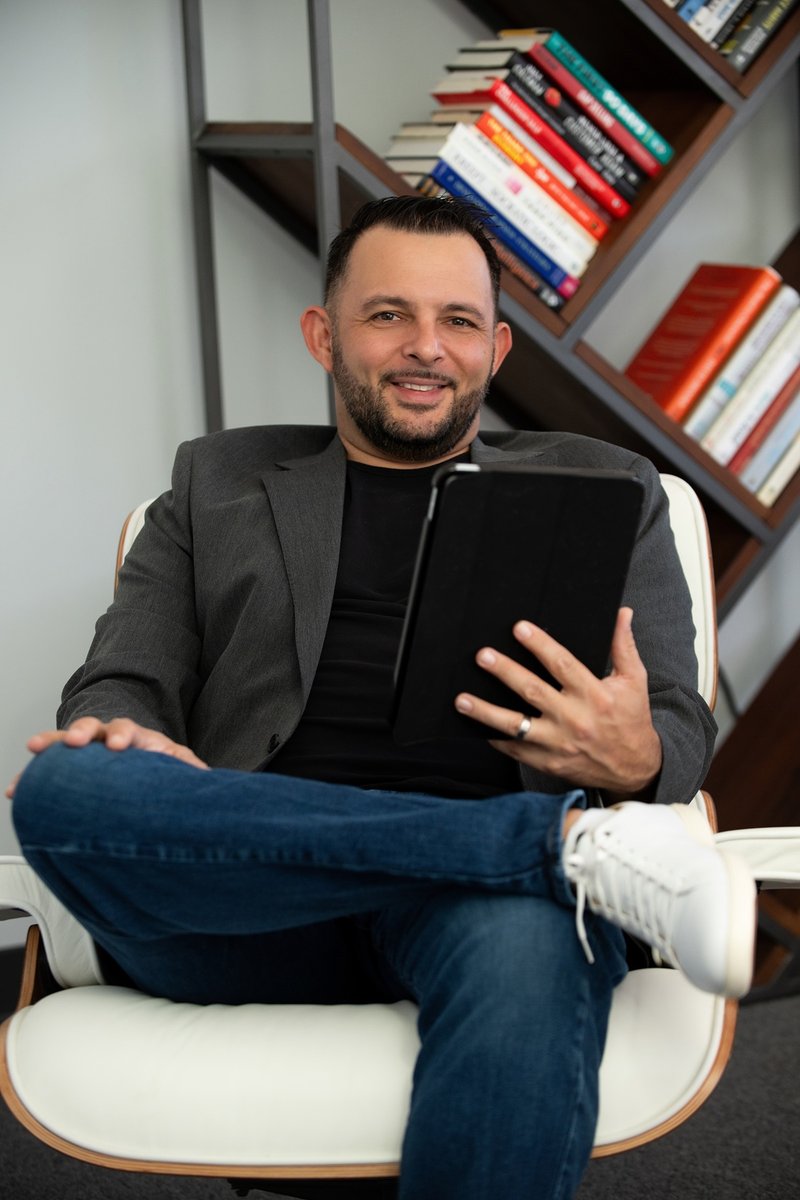
Founder  ·  Strategist  ·  Builder

pronounced Louie

LuyTeitelroit

Two decades building the technology infrastructure that lets companies make better decisions, from five-person startups to half-billion-dollar acquisitions.

The work taught me one thing clearly: the cost of a bad decision is about to get a lot higher.

Founder, Next Perimeter Founder, Clear Second Forbes Tech Council USF Muma College
Luy Teitelroit

Point of View

Most businesses don't have
a strategy problem.
They have a clarity problem.

The operators I've watched struggle (and I've been one) weren't short on ambition. They were managing what was directly in front of them. The urgent client. The difficult hire. The cash flow gap. All real. All consuming. None of it strategic.

The ones who built something durable learned to manage what was coming before it arrived. Decision systems in technology, in hiring, in operations: frameworks that give you a read on the situation before the crisis forces your hand. That's not instinct. It's architecture.

The Story

Built on a conviction.
Tested for two decades.

I studied computer science, taught myself PHP, and spent years in the field watching small businesses get trapped by the same broken model: IT vendors financially rewarded when things failed. Hourly billing. Reactive support. Clients trained to expect downtime as the cost of doing business. The incentive structure was the product.

So I built the opposite. Flat-rate, proactive, prevention-first. If the technology works, everyone wins. If it doesn't, that's on us, not a billable event.

The first years were not a success story. They were a survival story. Wrong clients, wrong pricing, wrong assumptions about what the market would pay for reliability before they'd felt what reliability actually meant.

What got us through wasn't confidence. It was iteration. Deliberate bets on cloud-first architecture before it was consensus. On security as non-negotiable when most SMBs still treated it as optional. On the idea that your identity is the new perimeter long before the industry had language for it.

In 2024 the company rebranded to Next Perimeter. Not because the market changed. Because we finally had a name that said what we actually believed.

Today I'm pursuing SOC 2 Type 2, building a second company, completing my degree at USF one class at a time, and preparing to launch After the Handshake, a show about what happens when the deal is done and the real work begins. All of it connected. None of it accidental.

Selected Work

Startup to Acquisition

Core Hydration

Built the entire IT stack from scratch when the company had five employees: communications, email, lifecycle management, procurement, onboarding. Served as strategic technology partner through every phase of growth until the company was acquired by Dr Pepper Snapple Group for $525 million.

Headquarters Relocation

Popchips

Led the full technology scope of a headquarters move from San Francisco to Santa Monica, covering vendor negotiations, architect coordination, HVAC, power, ISP procurement, and end-to-end project management from exit to go-live. Came in below downtime expectations.

Hospitality Infrastructure

Soho House

Designed and deployed network infrastructure across multiple properties including the Sunset Strip location and Malibu Beach House. The constraint was beauty: every access point hidden inside custom millwork. Coordinated with GCs and architects across a restaurant, event space, and business center that had to look like a home.

On AI & Decision Risk

The blast radius
of a bad decision
just got exponentially larger.

Every technology wave hits businesses differently depending on whether they were ready. Cloud rewarded the prepared and punished the reactive. Security followed the same pattern. AI is moving faster and hitting harder.

The businesses that will suffer most aren't the ones that ignore AI. They're the ones that deploy it with the wrong people operating it. AI doesn't make bad judgment more efficient. It amplifies it. A poor decision-maker with AI capabilities doesn't make fewer mistakes. They make more of them, faster, at scale.

This is why who you hire has never mattered more. The humans who keep their seats at the table won't be the ones who know how to use the tools. They'll be the ones who know how to make good decisions operating them.

"We are all riding horseback right now and cars started showing up everywhere. You cannot afford to stay on the horse. Your competitors won't. But the ones who win aren't just faster. They know where they're going."

Community & Service

Beyond
the work.

Building companies is only part of it. The other part is showing up for the city, the community, and the people who don't have the same advantages. Tampa has given me a lot. These are some of the ways I've tried to give it back.

I'm also a husband and a father. That's the context everything else lives inside.

Civic Leadership

Tampa Connection, Alumni

A selective civic leadership program connecting Tampa's emerging leaders across sectors. As part of our cohort project, our team partnered with Stay In Step, a spinal cord injury rehabilitation nonprofit, and delivered meaningful infrastructure work for their organization.

Technology Access

Senior Tech Literacy Program, Volunteer

Spent three years as a monthly volunteer with a free technology literacy program pairing youth volunteers with elderly residents. Recruited volunteers, built the program structure, and handed it off when it was self-sustaining without needing me there.

Food Security

Feeding Tampa Bay, Volunteer

Hands-on volunteer work processing incoming donations for one of Tampa Bay's largest food relief organizations.

Higher Education

University of South Florida

Active in USF's entrepreneurship community including board service at the student foundation level and ongoing engagement with the university's emerging AI and technology initiatives.

Philanthropy

Technology Chair, Private Endowment Foundation

Serving as Technology Chair for a private endowment foundation, advising on technology strategy and infrastructure at the institutional level.

Connect

Find me
where it matters.

LinkedIn is where I share what I'm learning and thinking. Everything else flows from there.

"I don't think of risk management as a discipline. I think of it as what every good business decision has in common: you thought about what could go wrong before it did. Most people skip that step. The ones who don't tend to build things that last." Luy Teitelroit